Kitchen thinking
Why recipe sites bury the recipe (and what cooking-first looks like)
Recipe pages bury the method under essays for a reason. Here's the incentive behind the life story — and what a recipe looks like when cooking comes first.
By the RecipeGPT Team · 3 August 2026 · 6 min read
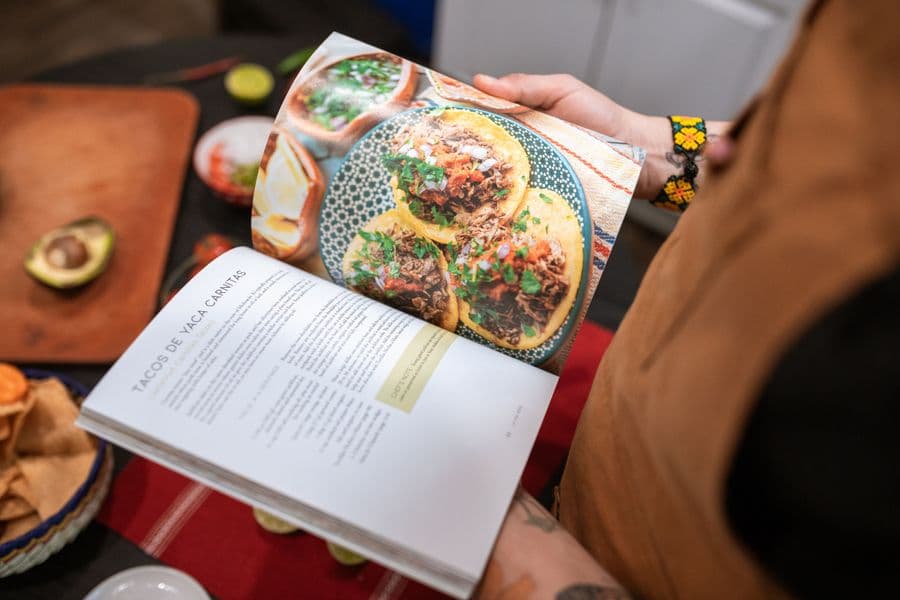
You know the scroll. You searched for a lemon chicken recipe and landed on a childhood in Tuscany, a digression about spring, four near-identical photos and a paragraph about a husband named Greg who was sceptical about capers. The ingredients are 1,400 words south of here.
It's easy to be snide about this, and most of the internet is — “nobody cares about your grandmother, where's the chicken” is practically a genre of comment. The more interesting question is why every recipe site converged on the same shape. Because nobody sat down and decided cooks love preamble; thousands of independent writers arrived at the identical format, which means the format is answering something real.
How we got here: a short history of the recipe page
Printed recipes were terse for a century because paper was expensive: Mrs Beeton gave you the method and moved on. Early food blogging (roughly the 2000s) added the personal essay because that was the entire point — you followed a person, and the recipe was the souvenir of their story. The stories were the product, and honestly, some of the best food writing ever published lived in them.
Then discovery moved to search engines, and the economics inverted. The recipe itself can't meaningfully differentiate — there are ten thousand lemon chickens, and a bare ingredient list looks identical to a machine. What differentiates a page is everything around the recipe: original prose, context, answers to related questions, time on page. Add advertising that pays per scroll, and the essay stopped being a stylistic choice. It became load-bearing.
An honest look at the incentive
So recipe writers, by and large, aren't being self-indulgent. They're answering the actual brief of their medium: demonstrate firsthand experience, stand out from identical dishes, keep the reader on the page, fund the work. For independent writers there's a deeper truth too — a recipe, legally and culturally, is barely ownable. The ingredient list is uncopyrightable fact; the story is the only part that's genuinely theirs. Asking a food blogger to delete the essay is asking them to delete the business and keep the costs.
(Yes, you're reading this on a blog. The difference we can offer isn't purity — it's that our recipes don't live here. They arrive in the app, method first, and this page's only job is to be worth the read on its own. Whether it is, is your call.)
What it costs at the hob
The trouble is that a page optimised for being found is often pessimised for being cooked from. And the cost isn't the scroll — the jump-to-recipe button mostly solved the scroll. The cost is what the format does to the method itself once you're actually cooking.
- Prose interleaves quantities with narration. “Add the wine — I like a Verdicchio here, which we first tried in…” means re-finding your place with wet hands, four times per dish.
- Critical timings hide mid-paragraph. The difference between blond and bitter garlic is one sentence you read forty seconds too late.
- Steps do three things at once. “Meanwhile, while the sauce reduces, blanch the beans and warm the plates” is a step you can read but not do — it's three timers wearing one number.
- Every site formats differently. Ingredients above or below, metric or cups, times bolded or buried — so every dinner starts with re-learning how to read. The one thing a cook's eyes want is for everything to always be in the same place.
A recipe you cook from is an instrument panel. A recipe you found is a landing page. The tragedy of the recipe web is that one page has to be both.
How to read any recipe like a cook (wherever you found it)
Until the whole web reformats itself, a three-minute habit converts any essay-recipe into something cookable. First pass: read the method once, start to finish, before touching a pan — you're looking for the trap (“marinate overnight”, “chill for 2 hours”) that decides whether this is even tonight's dinner. Second pass: mark the waits — every “until golden”, “simmer for 20”, “rest” — because those are your timers and your gaps for doing everything else. Third pass: stage the ingredients in order of use, prepped the way the list says (“diced” happens now, not at step four). Chefs call this mise en place; at home it's just refusing to be surprised.
Do that three times and you'll notice you're mentally rewriting every recipe into the same shape: sequenced actions, labelled waits, quantities where you need them. Which raises the obvious question — why isn't that simply the format?
What cooking-first actually looks like
Strip the job back to the kitchen and a recipe wants to be structured, not written: every step one action, quantities restated inside the step that uses them, a labelled timer on every wait, parallel work offered as an invitation on the waits rather than a “meanwhile” ambush, and the same dependable shape every single time so your eyes always know where to look. That's not a document — it's closer to a checklist with a clock.
This is the format RecipeGPT produces for every dish, whether you asked for a 25-minute spaghetti or pasted a link to that very lemon-chicken essay. Paste a link and it reads the actual page, keeps the author's ingredients and technique, restructures them into steps and timers scaled to your table — and credits the source with a visible “Adapted from” link, because the story wasn't the problem. The story was just in the way of the cooking.
The essays can keep being essays. Some of them are lovely, and the writers deserve the visit and the credit. But dinner deserves an instrument panel — and the friction of translating one into the other is no longer your job.
Frequently asked questions
Why don't recipe sites just put the recipe first?
Because the page's economics depend on everything that isn't the recipe: original prose to stand out among ten thousand identical dishes, engagement to fund the work, and the story — the only part of a recipe a writer can really own. Most sites added “jump to recipe” buttons as the compromise; the format itself is rational, which is exactly why it never changes.
Is it legal to restructure someone else's recipe?
Ingredient lists and basic methods are generally treated as uncopyrightable facts — what's protected is the author's expression: their prose, photos, and story. Restructuring a dish into steps you can cook from, for your own dinner, is what cooks have always done with every recipe they've ever read. Attribution is still the decent move, which is why imported recipes in RecipeGPT carry a visible link to the source.
What's actually wrong with “meanwhile” in a recipe?
It compresses parallel work into a sentence with no owner: you're mid-task when it fires, so it either interrupts you or gets skipped. The cook-friendly version is one action per step, with the overlap attached to the wait itself — “while this simmers, start step 5” — so parallelism is offered exactly when your hands are actually free. RecipeGPT bans the word outright and expresses overlap only as those hints.
Do jump-to-recipe buttons solve the problem?
They solve the scroll, which was the visible half. The invisible half remains: the method you jump to is still prose — timings buried mid-sentence, three actions per step, a different layout on every site. Getting to the recipe faster doesn't make it easier to cook from once you're there.
Skip to the cooking
Paste any recipe link into RecipeGPT and get the method as steps and timers — source credited, story optional.