Guides
One timer per step: how to get a whole dinner ready at the same time
Passive waits, attended waits, and a timer on every step: how naming your waits turns three-pans-at-once panic into a calm weeknight cook.
By the RecipeGPT Team · 3 August 2026 · 7 min read
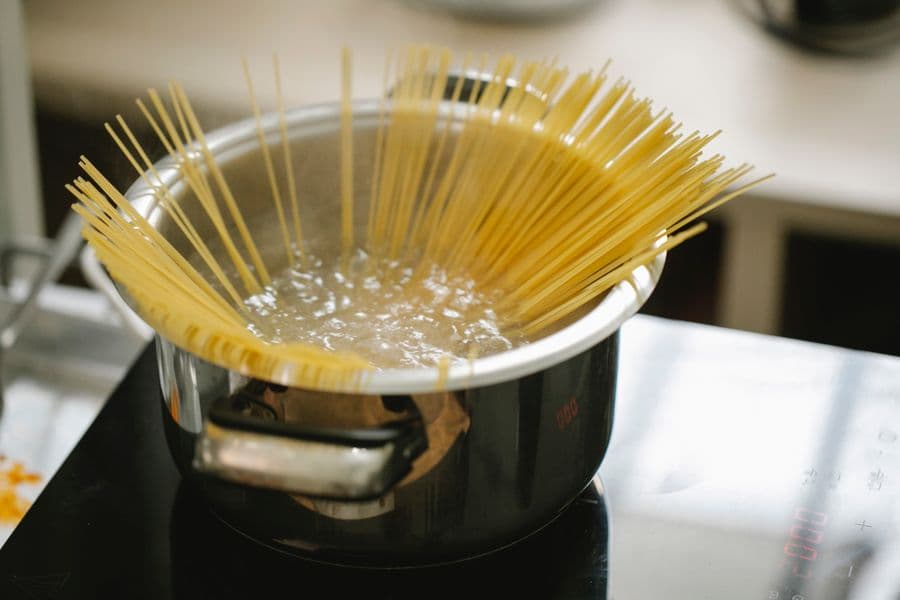
The hardest part of a weeknight dinner isn't any single pan. It's the orchestra: rice that finishes while the chicken's still raw, broccoli gone grey because the sauce demanded attention, the one mental clock in your head trying to track three different futures at once.
Professional kitchens solved this with brigades, printed timelines and a person whose entire job is calling the passes. At home, the fix is smaller and almost embarrassingly effective: name your waits, and give every wait its own timer. This guide covers the two kinds of wait, how to build a backwards timeline for any meal, the timing mistakes everyone makes, and how we've baked the whole discipline into every recipe so you never have to think about it again.
There are only two kinds of wait
- Passive waits — the oven, a simmer, a rest, a marinade, water coming to the boil. The food is busy; you aren't needed. Passive time is free time, and it's where the rest of dinner gets cooked. Every calm cook you've ever watched is simply someone who spends passive time on purpose.
- Attended waits — risotto being stirred, anything shallow-frying, caramel, garlic in hot oil. You stay. Trying to “quickly do something else” during an attended wait is how smoke alarms get tested and how garlic goes from blond to bitter in the forty seconds you were rinsing a colander.
Once you sort every wait into one of those two boxes, multi-pan cooking stops being a juggling act and becomes a schedule: do the attended things one at a time, and slot the prep and the other pans into the passive gaps. The stress was never the number of pans — it was not knowing which pan owned you at any given minute.
A worked example: chicken, rice and greens, all landing together
Take the dinner that defeats everyone: sticky chicken thighs (about 35 minutes in the oven), rice (12 minutes plus a 5-minute rest), and charred broccoli (about 10 minutes). The amateur order is to start the rice first because rice feels like the “base” — which is exactly how rice ends up cold. The schedule works backwards from the finish line instead:
- T-40: oven on. Chicken in at T-35 — the longest passive wait starts first, always.
- T-35 to T-20: free passive time. Prep the broccoli, make the glaze, lay the table, do nothing. This gap belongs to you because the oven owns the chicken.
- T-17: rice on (12 minutes cooking + 5 resting lands it exactly at T-0).
- T-10: broccoli into a screaming pan or onto the chicken's tray. It's the shortest job, so it starts last.
- T-5: rice off the heat, lid on, resting. Glaze onto the chicken for its final minutes.
- T-0: everything lands together. Nothing waited under foil; nothing went grey.
The whole trick is those two rules: longest passive wait starts first, whatever needs your hands last starts last. Every multi-dish meal — Sunday roasts included — is this same calculation with bigger numbers.
One timer per step, labelled
A single egg timer forces one clock to mean three things, and a phone timer labelled “Timer 2” tells you nothing at all mid-chaos. The calm version is a timer per wait, each named — “sauce simmer”, “rice”, “rest the chicken” — so a beep tells you what it's for without opening a mental filing cabinet. This is exactly how RecipeGPT structures every recipe: each step that takes time carries its own labelled timer, marked as walk-away or stay-with-it, and you start it with a tap when you actually begin the step — the plan never runs ahead of your kitchen.
Passive steps come with an invitation, not an obligation: “while this simmers — start step 5”. Parallelism is offered exactly where it's safe, never assumed. (The word “meanwhile” is banned from RecipeGPT's steps by a hard rule — each step is one action, and the overlap lives in those hints. A “meanwhile” fires whenever the page decides; a hint waits until your hands are free.)
Any number of timers run at once, the screen stays awake while they do, and if a wait runs past its time the timer counts up rather than falling silent — overtime is information too. You always know which pan owns you, and by how much.
The five timing mistakes everyone makes
- Starting with the base, not the bottleneck. Rice-first thinking. The longest passive wait starts first, whatever it belongs to.
- Running two attended waits at once. A stirred risotto and shallow-fried anything cannot share a cook. If two dishes both demand hands, one of them changes technique (oven instead of pan) or waits.
- Trusting the printed time over the packet. Dried pasta, rice and grains cook per the brand's own instructions — a recipe's “10 minutes” is a default, not a truth. RecipeGPT flags packet-dependent timers so you can dial in what yours actually says.
- Treating the beep as “done”. A timer's job is to tell you when to check, not to declare food cooked. The cue decides; the clock schedules the cue.
- Skipping the rest. Resting meat and resting rice are real steps with real durations, not suggestions — and they're the most useful passive gaps of all, because they land right when plating needs your hands.
Honest clocks: cues, packets and the safety floor
Every good timed step pairs its minutes with what you should see, hear or smell: “until brick red, about 2 minutes”, “until the edges pull from the pan, 8–10 minutes”. The cue is the truth; the timer is the reminder to go look. Ovens run hot and cold, pans hold different heat, a crowded tray steams — clocks schedule your attention, cues make the call.
And one floor under everything: food safety is not negotiable to a schedule. Poultry to 74°C, mince cooked through, and when an honest range exists (“10–12 minutes”) the timer gets the safe end — never shortened to flatter a snappy total time. If safe cooking genuinely can't fit the time you have, the honest answer is a different dish, and a tool worth trusting says so instead of quietly serving you an 11-minute chicken thigh.
Because the schedule lives in the recipe rather than your head, it also survives changes: scale the dish to more people and the plan re-times itself around the new quantities and pan advice, instead of multiplying the chaos. The timeline is part of the recipe, not a skill you re-derive nightly — which is the whole reason weeknight cooking can be calm at all.
Frequently asked questions
How do restaurants get five dishes ready at once?
Mostly by doing the passive waits in advance (sauces held warm, proteins par-cooked, veg blanched) and firing only the attended parts to order — plus a expediter calling times out loud, which is exactly what a set of labelled timers does for a home kitchen. The home translation: front-load your passive time, and never run two attended waits at once.
Why does my rice always finish before everything else?
Because rice is usually started first out of habit, not maths. Count backwards instead: if the traybake needs 35 minutes and the rice needs 17 including its rest, the rice starts 18 minutes after the tray goes in. A per-step timer makes that automatic — and rice holds happily off the heat, lid on, for a few spare minutes if you're early.
Are the timers in RecipeGPT set in stone?
No — they're honest defaults you control. You start each one when you're actually at the step, packet-dependent timers are flagged for you to dial in your brand's time, you can nudge extra time onto a running timer, and if a wait runs long it counts up so you know by how much.
What's the difference between a passive and an attended timer?
Passive means walk away — the oven, a simmer, a rest — and it's the only kind that carries “while this waits, start step X” hints, because your hands are genuinely free. Attended means stay — stirring, shallow-frying — and inviting you elsewhere during one would be a small act of sabotage. Naming the type is half the calm.
Should I buy a multi-timer kitchen gadget?
They work, but they can't label themselves with the step they belong to, and they don't know your recipe. Timers attached to the steps themselves — labelled, typed, started when you start — remove the remaining translation work. The gadget worth having is a meat thermometer, because cues and safe temperatures outrank every clock in the kitchen.
Cook with the clock handled
Every RecipeGPT recipe arrives with a labelled timer on every wait — start each one with a tap and land the whole dinner together.