Kitchen thinking
Healthy eating isn't hard anymore. The friction was.
Healthy eating was never hard — finding, scaling and timing recipes was. What changes when the friction goes, and why cooking is still the point.
By the RecipeGPT Team · 3 August 2026 · 6 min read
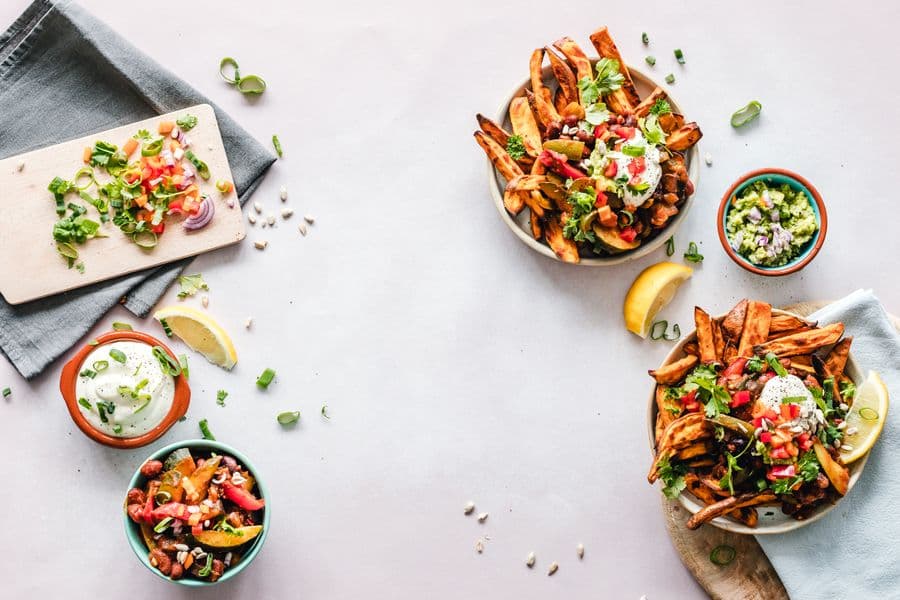
Nobody fails at healthy eating because chopping an onion is difficult. The cooking itself — heat, salt, time — hasn't changed in a century, and it was never the hard part. What made fresh food feel like a lifestyle for other people was everything wrapped around the cooking.
That's a strong claim, so let's be precise about it. The advice industry has spent decades telling people the obstacle is knowledge (you don't know what's healthy), or willpower (you know but won't), or time (you would but can't). Mostly it's none of those. Most people can name a healthy dinner in five seconds. What they can't do at 6pm on a Wednesday is find a version of it that fits tonight — the right serving count, the right half hour, the ingredients actually in the house — without a research project. So the delivery app wins, not because anyone chose it, but because it's the only option that doesn't ask questions.
Name the obstacle honestly and it's a list of frictions, each small enough to look silly and heavy enough to decide what you eat.
The five frictions
- Finding. Twenty browser tabs, three apps, a saved folder you never open. The recipe you loved last month is somewhere — which is to say, nowhere. Every dinner starts with search results instead of a decision.
- Choosing. Endless options are their own kind of hunger. By the time you've compared five stir-fries and read two life stories, the takeaway app has won by default — not on food, on decision cost.
- Scaling. The recipe serves four. You are two, or six. Now you're doing fractions over a chopping board, the sauce is wrong anyway, and the leftovers become a second, sadder version of the same meal.
- Timing. Three pans, one clock in your head. The rice finishes while the chicken's raw, the broccoli goes grey waiting, and “stressful” gets filed under “cooking” instead of under “timing”, where it belongs.
- Keeping. The winners never come back. Without a place your favourites live, every week starts from zero — and a kitchen with no memory cooks the same three defaults forever.
None of these is cooking. All of them arrive before or around the cooking — and together they're why a fresh dinner loses to a delivery app on a random Wednesday. The delivery app never asks you to find, choose, scale, time or keep anything. It just asks for money.
What “healthy” actually means here
A word on the h-word, because it's been abused. This isn't about macros, superfoods, or any diet with a name. The boring, durable version of healthy eating — the one every mainstream guideline converges on — is mostly: cook for yourself more often than not, eat a lot of vegetables, keep ultra-processed food occasional, and serve portions that match your appetite rather than a packaging department's. That's it. No tracking app required, no forbidden foods, nothing to fall off.
Which is exactly why friction is the real enemy. A definition of healthy eating that amounts to “cook real food, regularly” lives or dies on whether cooking regularly is easy. The nutrition was never the bottleneck. The Wednesday was.
What actually changed
The quiet revolution of the last few years isn't that AI can write a recipe. It's that a conversation can now replace the whole search-compare-adapt loop. You say “dinner for two, 25 minutes, there's spinach to use up” — one sentence — and the finding, choosing and scaling collapse into a single answer sized to your actual table. Point a camera at the fridge and even the sentence becomes optional.
And the answer can arrive as structure instead of prose: numbered steps that are each one action, quantities that restate themselves where you need them, a timer on every wait. The timing friction — the one that made weeknight cooking feel like plate-spinning — turns out to be a formatting problem. It was never you.
The keeping friction falls to the same logic: a recipe that earned a repeat gets a shelf and a permanent link instead of vanishing into tab history. And scaling stops being arithmetic the moment the serving count is a control the recipe must obey rather than a suggestion printed at the top. Five frictions; each one is, it turns out, removable.
Cooking fresh every night used to be a lifestyle for people with time. Now it's just a lifestyle.
The honest maths of a home dinner
It's worth doing the arithmetic the delivery apps hope you won't. A weeknight dinner for two from a delivery app in the UK lands somewhere around £25–35 once fees and the guilt-tip are in, and takes 30–45 minutes to arrive. A genuinely good home version — a tomato-spinach pasta, a traybake, a noodle bowl — runs £4–8 in ingredients and 25–40 minutes of mostly-passive time. The app's one real advantage was never speed or money. It was that it required no decisions. Remove the deciding and the comparison collapses in one direction.
Time honesty matters on the other side too, and it's where recipe culture keeps hurting itself. A “20-minute” recipe that takes 40 teaches people they're too slow for cooking, when the label was simply a lie. The fix isn't optimism, it's honesty: a tool should tell you the true wall-clock cost of a dish before you commit, refuse to pretend a brisket fits a Tuesday, and offer the version that actually does. Trust in the clock is what makes the habit stick.
The cooking is still the point
Here's what the tools shouldn't touch: the part where you stand at the hob and turn ingredients into dinner. Cooking for yourself is the single most reliable way to eat more vegetables, less of what you're trying to eat less of, and portions that match your actual appetite — not because an app says so, but because you decided what went in the pan. It's also, quietly, one of the few daily acts that's both productive and calming: twenty-five minutes where the phone loses and the pan wins.
So the honest pitch for AI in the kitchen is small and specific: remove the frictions, keep the cooking. Anything that promises to remove the cooking itself — meal replacement, dark-kitchen subscriptions, dinner as a logistics problem — is solving the wrong thing. The point was never to spend less of your life on food. It was to stop spending it on the search bar.
Start with something as plain as a good dinner for two tonight — or open the fridge and photograph it. The best thing you can do for your body is cook for it. And nothing about that is hard anymore.
Frequently asked questions
Isn't healthy eating expensive?
Cooked-at-home, it's usually the cheapest way to eat well: the dinners in our guides run a few pounds a head, and fridge-first cooking cuts the waste that quietly inflates food budgets. What's expensive is the health-branded aisle — you can ignore it entirely. Vegetables, grains, eggs, beans and a decent flavour shelf do the work.
I can only cook twice a week. Is that even worth it?
Yes — the habit compounds from wherever it starts. Two home-cooked dinners a week is roughly a hundred a year, each one displacing the most processed meal you'd otherwise have eaten. Start with the nights that are easiest, keep the winners somewhere they can be found again, and the number tends to drift up on its own.
Does RecipeGPT count calories or track macros?
No, deliberately. It doesn't quote calories or nutrition numbers and doesn't make health claims — goals like “eat healthier” or “high protein” steer suggestions directionally instead. If you track clinically, keep your tracker; this makes the cooking side of the equation easy.
What's the fastest way to actually start?
Tonight, one sentence: who's eating and how long you have — “dinner for 2, 25 minutes”. Pick one of the ideas that comes back, cook it with the timers running, and save it if it earned a repeat. That whole loop, including the eating, fits inside the time a delivery would have taken to arrive.
Start tonight
One question, a few honest minutes, and dinner's on. The frictions are our problem now.