Guides
What to cook with what's in your fridge (take a photo, get dinner ideas)
Point your camera at the shelf, not a search bar: how fridge photos become real dinner ideas, and a simple framework for cooking from what you have.
By the RecipeGPT Team · 3 August 2026 · 7 min read
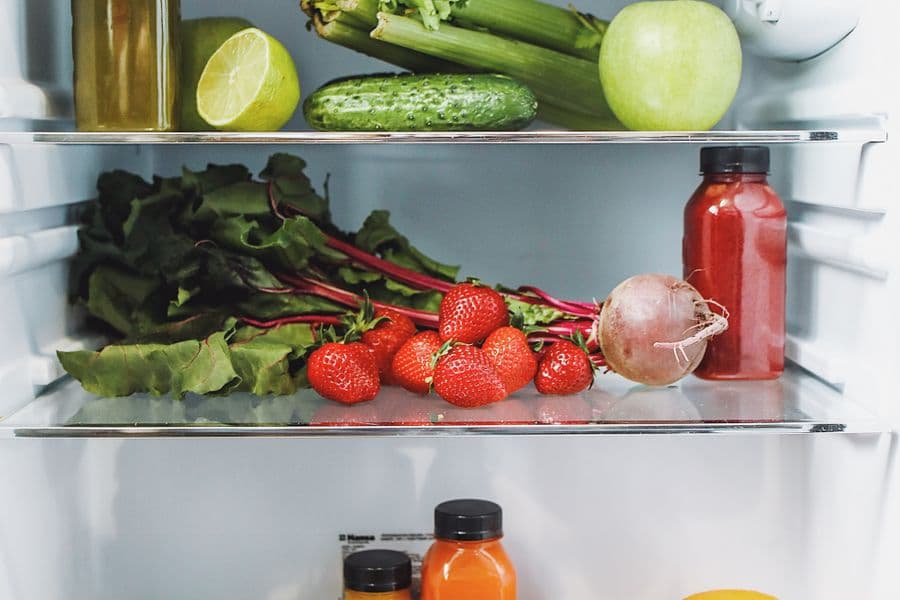
It's 6pm. There's half a bag of spinach, five mushrooms, some cooked rice, a knob of ginger and two chicken thighs in the fridge, and the question is the same as it always is: what does this add up to?
Searching “spinach mushroom rice chicken recipe” gets you dishes that need four things you don't have. Ingredient-matching sites get closer but treat your fridge as a checklist rather than a kitchen — they'll propose the one dish that uses everything, even when that dish is nobody's dinner. The better move, whether you use any tools at all, is to stop searching for a dish and start reading your fridge like a cook.
This guide gives you the four-question framework cooks use without noticing, walks it through three real fridges, and then shows the shortcut we built — point a camera at the shelf and let the reading happen for you.
The fridge-forage framework: four questions
Almost any pile of ingredients becomes dinner through four questions, asked in order:
- What's the anchor? The thing that would go off first, or the protein. Two chicken thighs, that salmon fillet, the tofu open since Sunday, the last of the halloumi. Dinner is built to use it — urgency picks the dish more reliably than appetite does.
- What's the bulk? Rice, pasta, potatoes, bread, grains, wraps — whatever makes it a meal rather than a snack. Cooked leftovers count double here: yesterday's rice is tonight's fried rice, stale bread is panzanella or fried croutons for a soup.
- What's the fresh part? Vegetables in rough order of urgency. Wilting spinach and soft tomatoes outrank the cabbage and carrots that keep for weeks — leafy and delicate first, hardy roots last.
- What's the flavour engine? The corner of the fridge door that never goes off: soy, miso, curry paste, harissa, mustard, fish sauce, parmesan, that knob of ginger. This is what turns “stuff, heated” into a dish — and it's why a nearly-bare fridge with a good door still eats well.
The framework doesn't hand you one answer; it shows you that there are several — and that's the moment cooking stops feeling like a test. The same four ingredients genuinely support three different dinners depending on which flavour engine you reach for.
Three real fridges, worked through
The opening example — spinach, mushrooms, cooked rice, ginger, chicken thighs. Anchor: the thighs. Bulk: the rice. Fresh: spinach first (it's wilting), mushrooms close behind. Engine: ginger plus whatever the door offers. With soy, that's a crispy-chicken fried rice, spinach folded through at the end. With curry paste, it's a quick chicken and spinach curry over reheated rice. With neither, garlic + the parmesan rind makes it a pilaf-ish rice bake. Three dinners, one shelf.
The vegetarian midweek fridge — half a courgette, eggs, feta, a soft tomato, the end of a sourdough loaf. Anchor: the eggs (nothing here spoils faster than the tomato, but eggs make it dinner). Bulk: the bread. That's shakshuka logic — tomato and courgette down first, eggs poached on top, feta over, bread for mopping. Or a frittata that eats the same list cold tomorrow. The tell: eggs plus any two vegetables is almost always a dinner.
The nearly-bare fridge — butter, a heel of parmesan, three eggs, one lonely onion, and a cupboard with pasta and a tin of tomatoes. This is the fridge people order takeaway over, and it's a genuinely good dinner: slow-fried onion + the tin = a ten-minute tomato sauce; pasta; parmesan; egg-yolk-enriched if you're feeling it. Store-cupboard cooking isn't the consolation prize — half of Italian cooking is exactly this.
Or: point your camera at the shelf
This is the part AI genuinely changed. Open RecipeGPT, attach a photo of the open fridge — up to five photos per message, if the pantry and the vegetable drawer deserve their own portraits — and send it with no message at all. A photo with no words means “work with this”: it says briefly what it can see that matters, then suggests two to four dishes built from exactly that, each as a tappable card with an honest time estimate.
Tap a card and the idea becomes a full plan — numbered steps, quantities in metric and imperial, a timer on every wait, scaled to however many are eating. The spinach-and-mushroom situation stops being a puzzle and starts being a 25-minute dinner. And because photos are treated as data about your kitchen rather than instructions, a stray label or a joke magnet on the fridge door can't derail what you're cooking.
Words still steer. “Dinner from this, nothing fried” or “use the chicken and whatever's most urgent” narrows the cards before they arrive. The framework above doesn't disappear — it's effectively what runs on your behalf, with the door's flavour engines assumed rather than photographed.
What a photo can't tell you
A camera can't smell. No photo reveals whether that cream is three days past its date or how long the leftover rice has been sitting — and RecipeGPT is deliberately careful here: judging freshness or doneness from an image is guesswork with real stakes, so for anything risky it anchors its advice in proper checks like internal temperature, and a photo alone is never treated as proof that food is safe to eat. Your nose, the dates, and how the food was stored still outrank any AI. Cooked rice in particular deserves respect: fridge it fast, use it within a day or so, reheat it properly hot.
Fridge-foraging is also where a saved dietary profile quietly earns its keep — the suggestions respect your allergies and preferences without you re-typing them over a photo of a crowded shelf. And when the forage produces a winner, the natural next move is scaling it to your table — leftovers-on-purpose is a strategy; accidental vats of stir-fry are not.
Making fridge-first cooking the default
The deeper win isn't any single rescued dinner — it's flipping the order of operations. Most of us decide what to cook, then shop for it, then watch half the fridge lose the race. Fridge-first cooking decides from what's already there, which is cheaper, faster, and quietly the most effective anti-waste habit a home kitchen has. Two or three fridge-first dinners a week is usually all it takes to stop throwing food away, and it pairs naturally with a couple of planned anchors for two on the nights you want something specific. The takeaway apps win on the nights deciding feels hard; remove the deciding, and the fridge wins more often than not.
Frequently asked questions
What if my fridge is genuinely bare?
The framework still works on the cupboard: pasta + tinned tomatoes + the flavour shelf is dinner, and so is rice + eggs + soy. Ask RecipeGPT what's possible with what you name — if the honest answer is “not much, but here's a 10-minute store-cupboard pasta”, that's the answer you'll get, not an invented feast.
Do I have to write a list of every ingredient?
No — that's the point of the photo. Snap the shelf and send it. If you'd rather type, a rough list works too: “half a bag of spinach, mushrooms, cooked rice, chicken thighs” is plenty to suggest from. Precision matters for the recipe, not for the ideas.
Can it tell me if my leftovers are still good?
No — and be wary of anything that claims it can from a photo. It will give an honest read of visible cues, but freshness and food safety need your judgement: dates, smell, and how the food was stored. When in doubt, don't.
What staples make fridge-foraging actually work?
The flavour engines: soy sauce, a curry paste, harissa or chilli, mustard, miso if you're keen, parmesan, decent olive oil, and always onions and garlic. With those on hand, nearly any anchor + bulk + veg combination resolves into a real dish. They're also the cheapest section of the shop per dinner they rescue.
How is this different from those ingredient-matching recipe sites?
Matching sites retrieve existing recipes that happen to contain your ingredients — usually demanding several more you don't have. A conversational tool composes a dish around exactly what you've got and your constraints (time, servings, dietary), and lets you push back: “no oven tonight”, “make it lighter”. It's the difference between search results and an answer.
Your fridge already knows what's for dinner
Photo in, ideas out — then a step-by-step plan for the one you pick.